Two distinctly different visions in the artificial intelligence community are at war, and the outcome could determine the future of humanity.
The Yin
Just over a decade ago, I attended a dinner event sponsored by the Churchill club — a group I sorely miss. Formed by the wives of Silicon Valley executives, it was a worthy venture that sought to shed light on various important topics via discussion panels. Hats off to you ladies. Well done.
This particular evening, the event was held at the Computer History Museum in Mountain View, CA. By the way… If you’re into computers, the museum itself and the Web site are absolute must-visits.
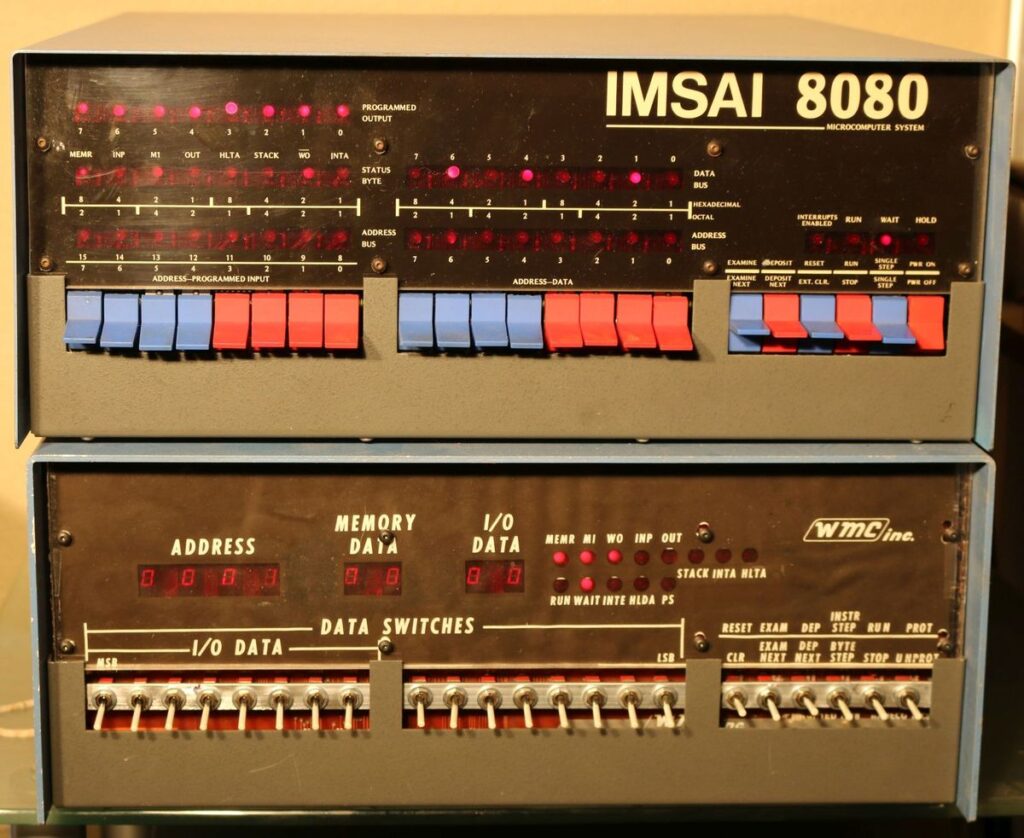
The subject matter this particular night was AI and chess, the guest of honor being the world champion and one of the all-time great chess players — Magnus Carlson. Look up the magnificently counter-intuitive, brilliant end-game in a match against Vishy Anand — a wonderful player in his own right. It was astounding.
Why a chess master in a discussion of artificial intelligence? Because nerds have been programming computers to play the game since they came into existence. Indeed, computer chess (as well as music, and other games) might well be considered the genesis of the search for artificial intelligence. How far has it progressed? Carlson admitted that the best he could likely do against a top modern chess program is to draw.

Mr. Carlson, who to my way of thinking is wise beyond his years, has also stated that he often uses chess simulations to set up problems for him to solve, but he has no interest in competing against them. Interpreting that, he feels that the technology should be a tool in human hands and there’s no satisfaction to be gained or lost by competing with it.
The Yang
Alas, I attended another Churchill club discussion entitled Augmenting human intelligence that proved far more disturbing. At least to me. You can view the discussion on YouTube by clicking on the link above.
The two featured guest speakers were John Wilkens, the driving force behind IBM’s Watson, and Yoshua Benigo, a Montreal professor. The difference in their attitudes and beliefs was day and night. Mr. Wilkens sees AI as a tool for humans to exploit, and to use for their benefit as they see fit.
Yoshua on the other hand seemingly believed that there are responsibilities that should be handed over to AI. In other words, for AI to not only come up with answers, but to implement solutions with the wisdom and impartiality its creators he feels might lack.
At the time, self-driving cars were in their infancy, so the discussion turned towards morality, or more specifically — morality as it applies AI. The classic conundrum for driver-less vehicles is that when plowing into something is inevitable, what to choose?
A worst case scnario would be choosing between a senior citizen with a walker, and a mother with her child. You have to hit one. Which will it be? If you say the senior citizen, you’re likely correct — at least in the number of life-years saved. But it’s bad deal either way.
I have a distant, non-blood relative that actually worked on similar problems for the U.S. Military’s armed drones. Yes folks, there is at least a consideration of giving machines the power of life or death.
What is AI, actually?
As happens with just about everything that marketing types, or other poorly informed or incentivized people get involved with, the definition of AI has shifted.
Originally conceived as the complete replication of human intelligence sans the emotions and primal impulses, it’s now used to describe anything that involves heuristics and pattern recognition. Is that the end-all of intelligence? One might ponder if the emotions and primal urges aren’t actually an important part of the equation.
Most of what current AI does is the aforementioned, basic pattern recognition and replication. Using Siri, Bixby, Alexa, etc. as examples : Phoneme recognition and libraries of such are used to reconstruct words, definitions of the words are looked up, multiple definitions and word patterns are used to reconstruct context, then context is searched for concepts, etc.
This indeed mimics what we do as humans, but…
Why is AI be better at some things?
The strength of AI is the amount of data it can scan and process to achieve a result. Our brains only hold so much — the reason we specialize in certain fields. An AI can cross disciplines with impunity, perhaps arriving at solutions that might escape us mere mortals. Then again, some humans are pretty good at this as well.
But AI also won’t suffer from memory issues or bodily breakdown. It can also more easily retain and correlate previous results.
Why might AI not be better in all ways?
The human mind is a complex mechanism that functions using methods we still only vaguely understand. It can arrive at conclusions it seemingly has no right to. Call it what you will, a spark, intuition, insight, a sixth sense… Whatever it is, it is very difficult to program.
There’s another issue with “AI” — it relies on data that we provide. There’s an old saying among computer folk: Garbage in, garbage out. Artificial intelligence processes what we humans have learned or gathered and written down, and we are most certainly fallible. Not to mention biased in many ways, prone to believing what we want to believe, taking the easy way out, trusting in people and info we shouldn’t, etc.
Put bluntly, don’t take what ChatGPT or other AI entities provide as gospel, magical, or the last word. They are just synthesizing from information we’ve provided.
The Future and AI
Alas, while I’m firmly in the “AI as our tool” camp, there are certainly forces that are not. You can see that in the current gold rush of data centers, and a premature willingness to fire workers and replace them with AI.
Many merchants (not all) show no allegiance except to their money, and they’ve been sold on the idea that AI will increase their take. Currently it won’t, and some of these businesses are learning the hard way that AI is not nearly the panacea for labor costs as sales types would have them believe.
All I can say is good luck to us all. We’ve had atomic weapons for over eighty years and we haven’t had a nuclear war yet, so perhaps it’s not a doomsday scenario after all. The battle continues.